

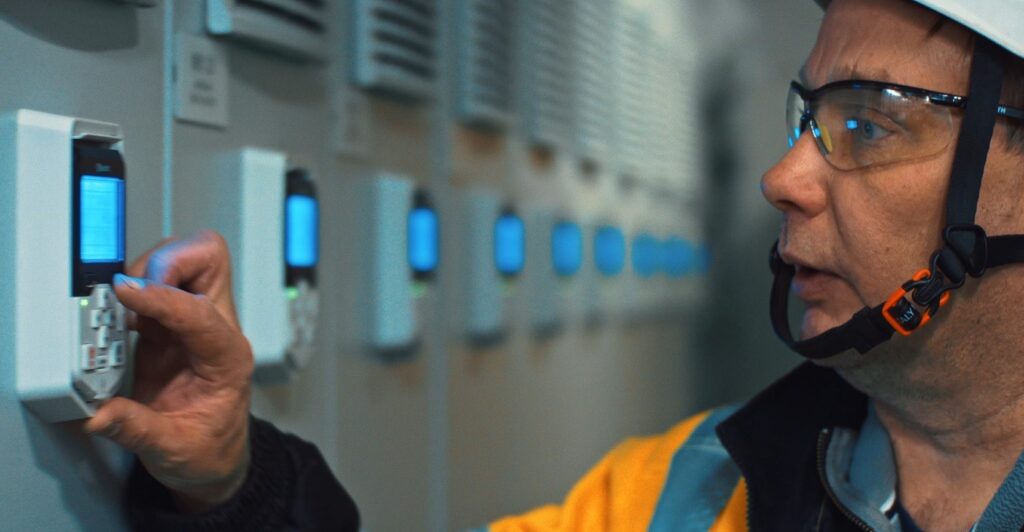
Automation is a key means of improving production efficiency and building more responsible sawmills. This change is being driven by the new Machinery Regulation EU 2023/1230, which extends safety requirements to cover automation, software and cybersecurity.
When the automation or electrical systems at a sawmill are upgraded, the risks associated with its operations are also assessed at the same time. An external expert is often able to identify new areas for improvement that enhance safety, which in turn raises safety awareness throughout the organisation.
Any observations made are recorded in the risk analysis, and these can be used as a basis for sharing information and providing guidance to employees who use the saw line.
It is not possible to achieve a completely risk-free factory environment, but automation can help to reduce the risk of accidents as well as the reputational damage and financial losses caused by production downtime.
Safer production using less energy
New automation systems and energy-efficient electrical solutions reduce power consumption and waste heat. At the same time, production can be managed with greater precision than before, and operations and energy use can be optimised.
In a modern sawmill, for example, dynamic motion control can be used to utilise braking energy more efficiently, thereby reducing the need for cooling. Properly implemented software design can prevent production stoppages and make machinery operate more efficiently and effectively.
There are always safety risks associated with equipment in use, but these can be minimised through the development of automation.
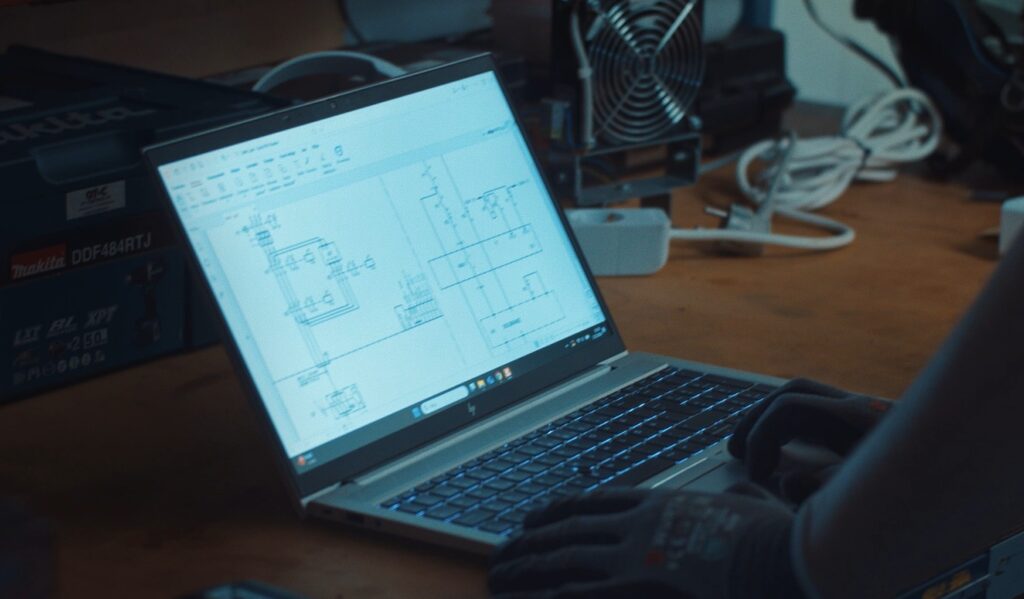
Well-designed automation processes and safety solutions improve production reliability and efficiency, whilst reducing the likelihood of human error. Safety naturally improves as production is automated.
The new Machinery Regulation EU 2023/1230 is changing the approach to safety
In future, changes relating to automation may also constitute what are known as ‘significant changes’, which require the risks associated with the production process as a whole to be assessed and documented. In practice, automation development will continue to be carried out in the same way as before, but the assessment methods will change.
When implementing the Machinery Regulation, consideration must be given to, amongst other things, cyber security, data protection, the use of artificial intelligence in self-learning machines, and the impact of autonomous machines on people’s working practices and ergonomics.
Overall, the Machinery Regulation requires corporate responsibility to be documented even in situations where there have been no changes to safety procedures. The machine owner is responsible for the documentation and for ensuring compliance with CE requirements.
Regulation 2023/1230, replacing the EU Machinery Directive
- replaces the previous Machinery Directive 2006/42/EC, which covers all machinery – including sawmills, conveyors and automated production solutions
- came into force in 2023
- shall apply from 14 January 2027
Automation is part of corporate responsibility
Safety, energy efficiency and cyber security together form the foundation of responsible industry. Modern automation helps to reduce energy consumption, improve safety and support corporate responsibility reporting.
Investments in automation are no longer merely technical upgrades, but strategic solutions for enhancing competitiveness and corporate responsibility in the sawmill industry.
OT-Control helps

The aim of developing automation is always to improve productivity. With the help of an expert assessment, the production line at the old sawmill can achieve a efficiency increase of tens of per cent.
However, in addition to energy efficiency and health and safety at work, consideration should be given to how corporate responsibility can be developed in a holistic manner.
OT-Control identifies safety risks, highlights areas for improvement and, above all, ensures that the automation development work provided is tailored to the needs and objectives of each sawmill and complies with the requirements of the EU Machinery Directive.
Would you like to use automation to analyse the operations of your sawmill?